


Having said that, I worry about the effects these types of movies have on young audiences, especially when it comes to their expectations of how relationships really work. In the past, I’ve blogged about the dangers of taking these movies too seriously, but today I want to explore some of these misconceptions in greater depth.
Keep in mind that every rule has its exception (just think of He’s Just Not That Into You!), but be wary of applying every romantic comedy trope to your own life.
The Friday Five: Misconceptions of Romantic Comedies

People are attracted to this idea for many reasons. For one thing, many of us have close friends of the opposite gender, and so this reassures us that even when we are having all sorts of problems in our love lives, we always have that one person to fall back on. This also tells us that someone we care about deeply has been there the whole time, just waiting for us to love them back. And it’s true that many of the traits we admire in our friends are equally desirable in a boyfriend or girlfriend, but there is also such a thing as the friend zone. As Chuck Klosterman mentions in Sex, Drugs and Cocoa Puffs, we are not always attracted to our friends, and to recommend that everyone date their best friend would be almost irresponsible. While I do believe that significant others should evolve into strong friendships over time, I don’t think those relationships should start out the other way around. Unless you’re madly in love with that person, you risk sacrificing a strong friendship all to avoid potential loneliness.

*
2. You will fall for your enemy.
The more passionate the banter, the more passionate the relationship? Wrong. Some movies (Katherine Heigl stars in quite a few of them!) emphasize the idea that the less you get along with the other person, the more likely they are your soulmate. While you don’t always have to agree with your significant other, it would be foolish to assume that polar opposites who can’t stand one another at first are going to end up happy together. Maybe it worked for Elizabeth Bennett and Mr. Darcy, but 1800s romance novels are a whole different ballpark! 🙂
*
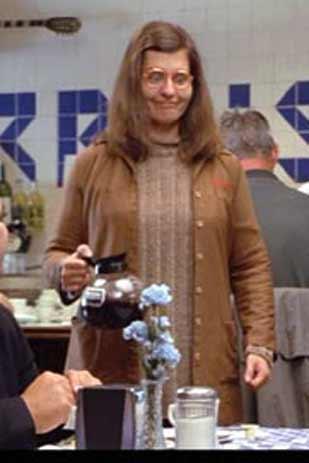
Tons of romantic comedies have it: the montage of eyebrow plucking, hair styling and wardrobe fixing. The girl learns how to apply makeup or insert contact lenses, and suddenly all is right with the world. She sheds her old image and emerges a glamorous new woman. But girls have to remember that it’s not just the makeover that has the prom king begging for a date with our young heroine; it’s the confidence she now exudes because of those changes. Alterations to one’s outer beauty can only help so much.
*
4. The nice guy always wins.
While being nice is something that I try to advocate every day, I can’t always promise that the sweet guy who comforted the girl in her time of need is going to win her heart over the jerk that she’s been dating for years. Some people are attached to those people worst for them, and often they place their protectors (like the nice guy above) in the aforementioned friend zone. This doesn’t mean you shouldn’t try, but it also doesn’t mean that you should be surprised when the girl has a harder time than expected in getting over a guy not worthy of her time.
*
5. One grand gesture is all it takes.
If you lie to your significant other about your identity, or cheat on them with their best friend, or do anything that puts your relationship in question, a simple “heartfelt” speech isn’t going to fix things. Although I always hold my breath for the adorable speeches at the end of romantic comedies, I realize that words mean nothing if there isn’t some meaning behind them. In other words, if someone seriously hurts you, you can’t expect a kiss in the rain to heal those wounds.